Risks and Challenges of Incorporating in Marshall Islands Compared with Others
Banking scrutiny, reputation, economic substance reporting and ownership records: the main challenges of a Marshall Islands company and how to manage them.
 6 min read
The Republic of the Marshall Islands (RMI) is one of the best-known jurisdictions for international companies. Incorporation is fast, the corporate law is modelled on Delaware's, ownership records stay private and a non-resident corporation pays no tax on income earned outside the islands. It is also home to one of the world's largest ship registries, which is why so many shipping companies use it.
Those benefits come with trade-offs. Before you incorporate, it helps to understand the challenges clearly so you can plan for them rather than discover them when a bank says no.
The core challenges of incorporating in the Marshall Islands
1. Banking access
This is the challenge most owners feel first. Many banks apply enhanced due diligence to companies from low-tax jurisdictions, and some will not onboard them at all. A Marshall Islands company can still open accounts, but usually with a narrower set of banks, electronic money institutions and payment providers, and only with a well-prepared file: certified identity documents, proof of address, a clear business description, expected transaction flows and evidence of source of funds.
We cover the options in Types of Payment Accounts for Marshall Islands Companies and the process in Opening a Payment Account for a Marshall Islands Company.
2. Reputation and international lists
The RMI has been on and off the EU list of non-cooperative jurisdictions for tax purposes. It was listed in 2018, removed in 2019, listed again in February 2023 over the enforcement of economic substance rules, and removed in October 2023 after the EU recognised its progress. It was not on the list in the February 2026 update.
Even so, the history means some banks, partners and customers ask more questions about an RMI company than about one from a major onshore jurisdiction. Be ready to explain why you chose it and what the company does.
3. Economic substance reporting
Under the Economic Substance Regulations, 2018, every non-resident domestic entity must file an annual economic substance report through the Registrar's online portal, generally within 12 months of its anniversary date. Entities carrying out certain relevant activities must also show real substance, such as management and core income-generating activity, in the jurisdiction.
Penalties are serious: an entity that fails to report or does not meet the substance test can be fined up to USD 50,000, rising to up to USD 100,000 for a repeat failure, or face revocation and dissolution. Official guidance is published by the Marshall Islands Registry.
4. Beneficial ownership records
Ownership information in the RMI is private, but not unrecorded. Non-resident entities must keep an up-to-date record of their beneficial owners and make an annual attestation to the Registrar that this information, along with lists of directors and officers, is maintained. The registered agent can request the records, and they are disclosed to authorities under legal process or international exchange agreements.
5. Limited public transparency
Privacy is a feature, but it can slow you down. Because directors and shareholders do not appear on a public register, counterparties and banks cannot verify them with a simple search. You may need certified or apostilled corporate documents, such as a certificate of incumbency or good standing, to prove who runs and owns the company.
6. Annual costs and deadlines
The annual government fee and registered agent fee fall due every year on the anniversary of incorporation. Letting them lapse leads to penalties and eventually annulment of the company.

How the Marshall Islands compares with other jurisdictions
Every jurisdiction balances privacy, cost, tax and reputation differently. Here is how the RMI compares with other options WeForm offers:
- Marshall Islands: registered in 2 to 3 business days; no tax on non-resident income; private ownership records; banking requires preparation; annual economic substance report.
- Seychelles IBC: registered in 1 to 4 business days; territorial tax; one director and shareholder allowed; accounting records kept in Seychelles; banking also requires preparation. See the benefits of a Seychelles IBC.
- Hong Kong: registered in 1 to 3 business days; territorial tax; strong reputation and banking ecosystem; audited accounts and profits tax filings every year.
- United Kingdom LTD: usually registered within 24 to 48 hours; corporation tax on profits; very high credibility and the widest choice of digital banks; public register of directors and owners.
In short, the RMI is fast and private, but its downstream challenges, especially banking, are more pronounced than in onshore jurisdictions like the UK or Hong Kong.
How to manage the risks
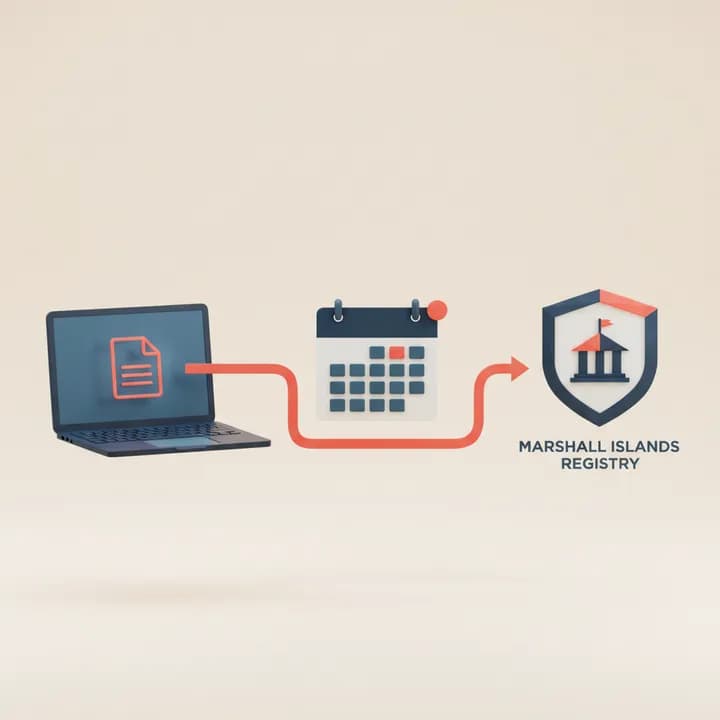
- Keep a compliance calendar. Track the annual fee, the economic substance report and any bank reviews. WeForm's client dashboard includes a compliance calendar for this.
- Prepare for enhanced due diligence. Have certified passports, recent proof of address, a business plan, contracts or invoices and source-of-funds evidence ready before you apply for accounts.
- Keep complete records. Maintain registers of directors, shareholders and beneficial owners, board resolutions and accounting records in one place.
- Match the structure to your activity. If your clients and banks expect an onshore company, a UK or Hong Kong company may serve you better than an offshore one.
- Watch for regulatory changes. Substance, transparency and reporting rules continue to evolve, in the RMI and everywhere else.
For the wider picture on offshore structures, read Off-shore company: everything you have to know, and for practical banking advice see the difficulties of opening a bank account.
Incorporate in the Marshall Islands with WeForm
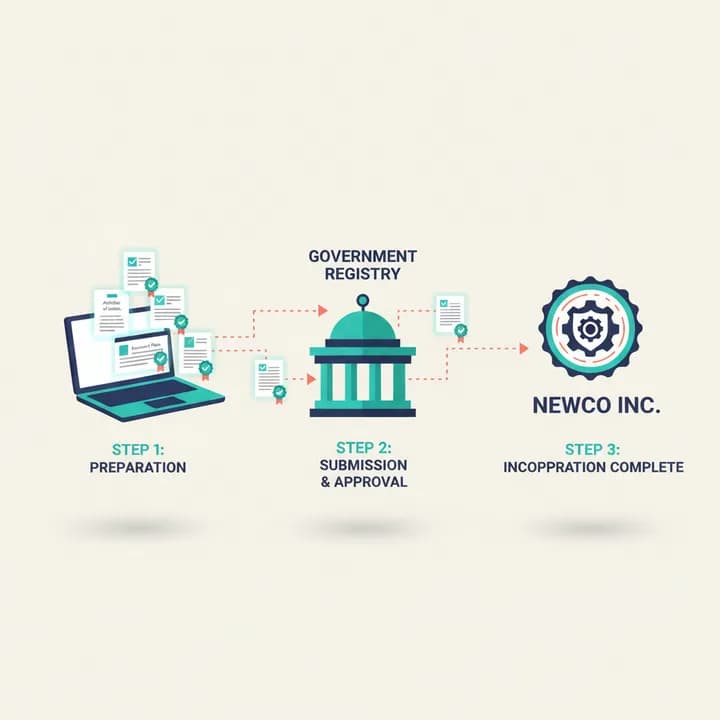
Our Marshall Islands company formation package covers name reservation with the RMI registry, Articles and Bylaws, the Certificate of Incorporation, share certificates, a private register of beneficial owners, registered agent and office for 12 months and the annual fee for year one. Registration usually takes 2 to 3 business days. Every package also includes help opening a payment account through our banking services, with no guarantee of approval.
Ready to go ahead? Start your application online.
FAQ
Is the Marshall Islands blacklisted?
Not currently. The RMI was removed from the EU list of non-cooperative jurisdictions in October 2023 and was not listed in the February 2026 update. Lists are reviewed twice a year, so check the latest version.
Can a Marshall Islands company open a bank account?
Yes, but the choice of banks is narrower than for onshore companies and due diligence is detailed. Many owners combine a bank account with an EMI or payment provider account.
Does every Marshall Islands company have to file an economic substance report?
All non-resident domestic entities must file the annual report. Only those carrying out relevant activities must also meet the substance test.
Are owners' names public in the Marshall Islands?
No. Directors, shareholders and beneficial owners are not on a public register, but the information is kept on record and can be disclosed to authorities.