Types of Payment Accounts for Marshall Islands Companies Explained
Bank accounts, multi-currency EMI accounts, merchant accounts and collection accounts: the payment account types open to a Marshall Islands company and how to choose.
 5 min read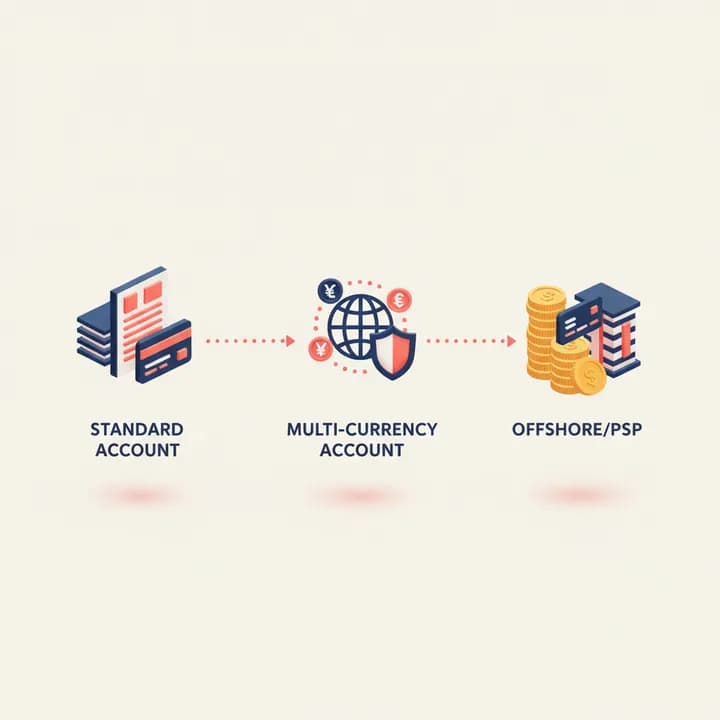
A Marshall Islands company is quick to form, but it only becomes useful once it can send and receive money. Choosing the right payment accounts is one of the most important decisions after incorporation, because a Marshall Islands corporation usually banks outside the islands and banks look closely at companies from low-tax jurisdictions.
This guide explains the main types of payment accounts available to Marshall Islands companies, what each one is good for and how to combine them.
Why payment accounts work differently for Marshall Islands companies
The Marshall Islands has no large domestic banking sector serving international companies, so a non-resident corporation opens its accounts with banks and financial institutions in other countries. Those institutions apply their own risk policies. Some do not accept offshore companies at all; others accept them after enhanced due diligence. In practice this means:
- The choice of providers is narrower than for a UK or Hong Kong company.
- A clear business model and complete documents matter more than usual.
- Many companies use more than one account type to cover different needs.
For a broader view of the challenges, read Risks and Challenges of Incorporating in Marshall Islands.
The main types of payment accounts
1. Corporate bank accounts
A traditional corporate account with a licensed bank is the foundation for many businesses. It offers deposit-taking, larger transfers, and often trade finance or credit facilities. For Marshall Islands companies, these accounts are usually opened with international banks that work with non-resident clients. Onboarding takes longer and the document requirements are the most demanding, but a bank account gives the most stability for holding significant balances.
2. Multi-currency accounts with EMIs
Electronic money institutions (EMIs) offer online accounts that hold and convert several currencies, with local receiving details such as EUR IBANs, GBP account numbers or USD details. Opening is remote and usually faster than with a bank. Multi-currency accounts suit companies that invoice clients in several currencies or pay suppliers abroad, because you convert only when you choose and avoid forced conversions on every payment. See our guide to opening a multi-currency business account.
3. Merchant accounts for card payments
If your company sells online, you need a merchant account with a payment service provider (PSP) or acquirer to accept card payments. The PSP assesses your website, products, refund policy and expected volumes. Some business models, such as subscriptions or digital goods, need extra documentation. Read What's the best payment solution for your business? for how to choose.
4. Collection and payout accounts
Collection accounts let you receive payments from marketplaces, platforms or clients in other countries using local payment details, then sweep the funds to your main account. Payout services let you pay contractors and suppliers in many countries in bulk. These are useful for agencies, e-commerce sellers and businesses with distributed teams.
Traditional banks vs EMIs and payment providers
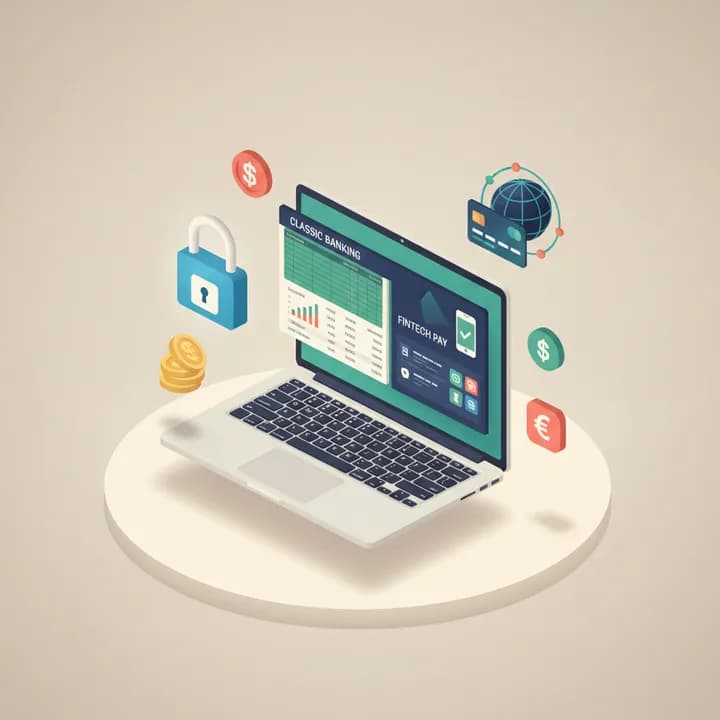
Traditional banks:
- Account opening: slower, with detailed due diligence and sometimes a video call or meeting
- Currencies: often a few major currencies, with conversion fees
- Integration: limited API access in many cases
- Transfer speed: international transfers often take 1 to 3 business days
- Strengths: stability, deposit-taking, credit and trade finance
EMIs and payment providers:
- Account opening: fully online, usually faster
- Currencies: broad multi-currency support with local receiving details
- Integration: APIs and integrations with accounting and e-commerce tools
- Transfer speed: often same day, sometimes instant within the provider's network
- Limits: client funds are safeguarded rather than held as bank deposits, and no lending in most cases
For a deeper comparison, see traditional banking vs digital payment solution providers.
How to choose the right setup
Most Marshall Islands companies end up with a combination: one account for stability and holding funds, plus a multi-currency or merchant account for day-to-day international payments. To decide, consider:
- Who pays you and how: bank transfers, cards or marketplace payouts.
- Which currencies you receive and spend.
- Monthly volumes and average transaction size.
- Where your clients and suppliers are, as some providers restrict certain countries.
- Your industry: regulated or higher-risk activities need specialised providers.
Documents you will typically need
- Certificate of Incorporation, Articles and Bylaws, and share certificates
- Register of directors and shareholders, and beneficial ownership information
- Passports and recent proof of address for directors and beneficial owners
- A business description or plan, with expected volumes and countries
- Contracts, invoices or a website showing the business is real
- Evidence of source of funds
Our step-by-step guide to opening a payment account for a Marshall Islands company covers the process in detail, and the difficulties of opening a bank account explains the most common reasons for rejection.
How WeForm helps
Every Marshall Islands company formation package from WeForm includes payment account opening assistance. We introduce your company to supported banks, EMIs and payment providers offering multi-currency accounts, card processing and collections. The process is fully remote and typically takes 3 to 14 business days; the final decision rests with the institution, so approval is not guaranteed.
Explore our payment solutions and banking services, or start your application.
FAQ
Can a Marshall Islands company open a bank account in the Marshall Islands?
In practice, non-resident Marshall Islands companies open accounts with banks and financial institutions in other countries.
Can a newly incorporated Marshall Islands company open a payment account?
Yes. Many EMIs and payment providers accept newly formed companies if the documents and business description are complete.
Is an EMI account as safe as a bank account?
Regulated EMIs must safeguard client funds, but they are not banks and deposit insurance usually does not apply. Many companies keep larger balances with a bank and use an EMI for payments.
Can a Marshall Islands company accept card payments?
Yes, through a merchant account with a payment service provider, subject to the provider's review of your business model and website.