Opening a Multi-Currency Business Account: Step-by-Step
A step-by-step guide to opening a multi-currency business account: who needs one, how to choose a provider, which documents you need and how to get approved.
 5 min read
Running an international business means getting paid and paying others in more than one currency. A multi-currency business account lets you receive, hold, convert and send several currencies from a single account, instead of juggling separate accounts or losing money to conversion on every payment.
This guide explains why a multi-currency account is worth setting up early, how to choose a provider, and how to open one step by step.
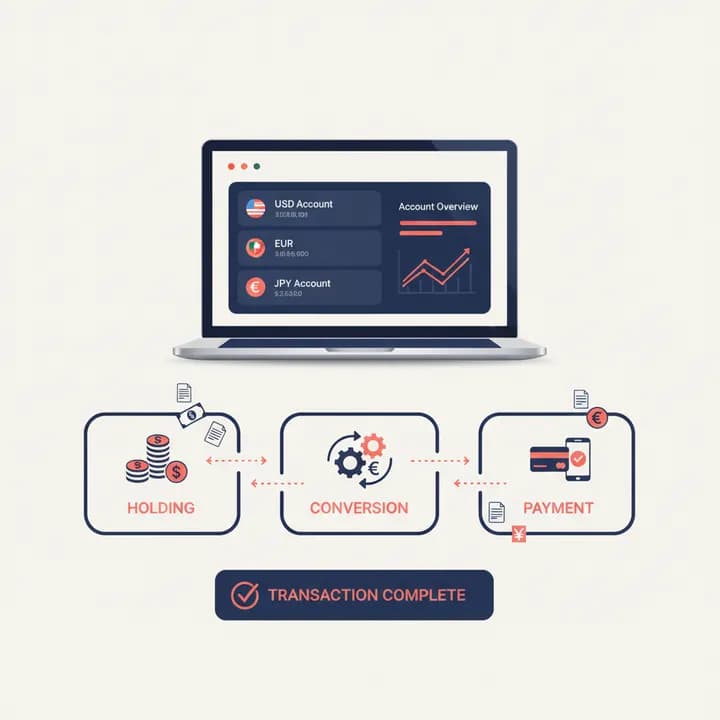
Why your business needs a multi-currency business account
- Avoid double conversion: receive EUR, hold it as EUR and pay EUR suppliers without converting to your base currency and back.
- Local account details: many providers issue local account details or IBANs in key markets, so customers can pay you with a domestic transfer.
- Control over exchange rates: hold balances and convert when the rate suits you, not when a payment forces you to.
- Faster settlement: local and instant payment schemes are quicker and cheaper than international wires.
- A more professional image: invoicing in your customer's currency removes friction and currency risk on their side.
Who benefits most from a multi-currency account?
- Exporters and importers dealing with suppliers and buyers abroad.
- E-commerce businesses selling into several markets. See things most e-commerce businesses miss when starting their online business.
- Startups and SMEs with international customers or investors.
- Freelancers and consultants working with overseas clients. Our guide to digital banking apps for freelancers and SMEs covers useful tools.
- Companies paying remote teams or contractors in different countries.
Bank or EMI?
You can open a multi-currency account with a traditional bank or with a regulated electronic money institution (EMI).
- Banks offer a broad range of services, including credit facilities and deposit protection, but onboarding is usually stricter and slower, especially for non-resident or newly formed companies.
- EMIs often onboard faster, support more currencies and are more open to international companies. They do not lend out client money but must safeguard it, keeping it separate from their own funds. They usually do not offer loans.
Many businesses use both: an EMI for day-to-day multi-currency payments and a bank for credit or larger reserves. Read more in traditional banking v digital payment solution providers.
What to look for in a multi-currency business account provider
- Currencies: does it support every currency you invoice and pay in, and can you hold balances in each?
- Account details: does it provide IBANs or local account details in the markets you need?
- Fees: account fees, transfer fees, card fees and charges for incoming payments.
- Exchange rates: how the margin over the mid-market rate is shown, and whether you can lock rates.
- Payment networks: SEPA, Faster Payments, SWIFT and local schemes.
- Integrations: connections with your accounting software, e-commerce platform and payment processors.
- Regulation and security: who regulates the provider, how funds are protected and which security controls it offers. Our article on safeguarding finances with digital banking lists what to check.
- Eligibility: which company jurisdictions, business activities and countries of owners it accepts.
How to open a multi-currency business account: step by step
- Form your company. You need a registered company first. The jurisdiction affects which providers will accept you, so think about banking when you choose where to incorporate.
- Define your expected transactions. Providers will ask what you sell, to whom, in which countries and currencies, and what monthly volumes you expect. Clear, realistic answers are one of the main factors in approval.
- Prepare your documents. Typically the certificate of incorporation, articles or memorandum, register of directors and shareholders, proof of registered address, passports and proof of address for directors and beneficial owners, and a short description of the business, often with a website or contracts.
- Apply and complete KYC. Most applications are now fully online, with identity verification by selfie and document scan. Expect follow-up questions on source of funds and business model.
- Activate the account. Once approved, you receive your account details, set up user access and security controls, and fund the account.
- Connect your tools. Link accounting software and payment processors, and share your new account details with customers.
Consistent documents matter more than anything else: the same company name, addresses and activity across your corporate documents, website and application. Our guide to the difficulties of opening a bank account covers the most common reasons for delays.

How WeForm supports your multi-currency account
Every WeForm company formation package includes assistance with opening a payment account. We work with banks, EMIs and payment service providers that offer multi-currency accounts, processing and collections, and introduce your company to the providers that fit your jurisdiction and business model. Account opening is fully remote, newly incorporated companies can apply, and it typically takes 3 to 14 business days. The final decision rests with the financial institution, so approval is not guaranteed.
See our banking services and payment solutions, compare our six jurisdictions on the jurisdictions page, or start your application.
FAQ
What is a multi-currency business account?
A business account that lets you receive, hold, convert and send money in several currencies, often with local account details in different markets.
Can a newly formed company open a multi-currency account?
Yes. Many providers accept newly incorporated companies, provided the owners pass due diligence and the business model is clear.
Do I need to be resident in the country where the account is held?
Usually not. Many banks and EMIs open accounts remotely for non-resident companies, although eligibility depends on the company's jurisdiction and the owners' countries of residence.
How long does it take to open?
Through WeForm, account opening typically takes 3 to 14 business days once all documents are submitted.
Is my money protected?
At a bank, deposits are usually covered by a deposit guarantee scheme up to a limit. At an EMI, funds are safeguarded separately from the provider's own money. Check which applies before you hold large balances.