Everything You Need to Know Before Setting Up an Offshore Company
A practical checklist for founders: tax at home, choosing the right offshore jurisdiction and entity, KYC, banking and the compliance rules that apply in 2026.
 7 min read
Setting up an offshore company is quick. Setting it up well takes some thinking first. The jurisdiction, the company type, your tax position at home and your banking plan decide whether the company will work for you or become a cost with no benefit. This guide is a checklist of what to consider before you incorporate.
If you are new to the concept, start with what an offshore company is and why people use one. If you have already made your choices, our step-by-step registration guide covers the process itself.
1. Understand what "offshore" really means
An offshore company is simply a company incorporated outside the country where its owner lives or where its main activity takes place. Large groups use foreign subsidiaries all the time, and so do freelancers, e-commerce sellers and holding investors. It is legal. What is not legal is using it to hide income or evade tax.
A simple example shows why location matters. A company in Australia pays corporate tax at 25% or 30% on its profits. A Hong Kong company pays profits tax of 8.25% on the first HKD 2 million of assessable profits and 16.5% above that, and profits sourced outside Hong Kong can be exempt under its territorial system. The difference is real, but so are the conditions attached to it.
2. Be clear about tax optimisation versus tax evasion
Tax optimisation means choosing a lawful structure that reduces tax. Tax evasion means not declaring what you owe. Before you incorporate, check three things with a tax adviser in your country of residence:
- Controlled foreign company (CFC) rules. Many countries tax residents on profits of low-taxed foreign companies they control, even if no dividend is paid.
- Place of effective management. If you run the company from your home country, it can become tax resident there.
- Personal tax on distributions. Salary and dividends you take out are usually taxed where you live.
Information is shared automatically. Under the OECD Common Reporting Standard, financial institutions in participating jurisdictions report accounts held by foreign tax residents, and the US FATCA rules do the same for US persons.
3. Tax-free or low-tax jurisdiction?
Offshore jurisdictions fall roughly into two groups.
Zero-tax jurisdictions
These charge no corporate tax on non-resident or foreign income. They are attractive on paper, but banks and counterparties often apply stricter checks, and rules can change quickly. Some have been placed on the EU list of non-cooperative jurisdictions for tax purposes, which can trigger extra reporting and withholding for your clients in the EU.
Low-tax and territorial jurisdictions
These tax income earned inside the country and exempt, under conditions, income earned abroad. Hong Kong, Seychelles and Costa Rica follow territorial principles. They tend to be better recognised by banks and partners, and some have tax treaty networks. If you accept a small tax cost in exchange for stability and recognition, a low-tax jurisdiction is usually the safer choice.
4. Checklist for choosing a jurisdiction
- Your goal: trading, consulting, holding investments, owning IP or running an online business.
- Tax: local tax on your type of income and how your home country treats it.
- Reputation: how banks, payment providers and clients view the jurisdiction.
- Banking access: whether institutions you want to use will onboard a company from there.
- Officers: minimum number of directors and shareholders, residency rules and whether a local secretary is required.
- Annual obligations: government fee, registered agent, accounting records, returns and economic substance filings.
- Timing and cost: how long incorporation takes and what is included.
- Your citizenship and residence: some banks and jurisdictions restrict certain nationalities.
For a wider comparison, see the best places to incorporate a company. If the company will mainly own shares or IP, read the best country for a holding company.
5. Jurisdictions to consider
WeForm forms companies in six jurisdictions, each suited to different goals:
- Seychelles IBC from USD 550: territorial tax, one director and one shareholder, incorporation in 1-4 business days.
- Marshall Islands corporation from USD 900: no tax on non-resident income, private ownership records, Delaware-modelled law.
- Hong Kong company from USD 1,250: territorial tax and a gateway to Asia, with a licensed company secretary included.
- UK private limited company from GBP 175: one of the most trusted company registries, often registered within 24-48 hours of filing.
- Costa Rica company from USD 2,200: territorial tax and 100% foreign ownership.
- IFZA Dubai free zone company: 100% foreign ownership, 0% tax on qualifying income and UAE residence visas. The price is calculated in the application.
6. Choose the right legal entity
Most offshore companies are companies limited by shares. The company is a separate legal person: it signs contracts, owns property, borrows and can sue or be sued in its own name. Shareholders are generally liable only up to the unpaid amount on their shares, so if the business fails, your personal assets stay outside the company. Check the key features of the entity before you choose:
- its legal status and whether it can trade locally;
- the liability of shareholders and directors;
- its tax treatment locally and in your home country.
Our article on company structure types compares the main options.
7. Prepare for KYC
Most offshore jurisdictions require incorporation through a licensed registered agent, who must verify who you are before filing. Expect to provide:
- a valid passport for every director, shareholder and beneficial owner;
- proof of residential address, usually dated within the last three months;
- the proposed company name and a short description of the business;
- information on the source of funds and, in some cases, a CV or bank reference.
With WeForm the identity check is done online, documents are signed electronically and your corporate documents appear in your dashboard.
8. Plan your banking before you incorporate
A company without an account cannot do much. Opening one is usually the hardest step for an offshore company, because banks and payment institutions apply enhanced due diligence to non-resident owners. Your account does not have to be in the same country as the company, but the institution must accept companies from your jurisdiction and your line of business.
Prepare a short business description, expected monthly volumes, main client and supplier countries, and proof of where your funds come from. Every WeForm package includes an introduction to supported banks, EMIs and payment providers; approval stays with the institution. Learn more on our banking services page and in the difficulties of opening a bank account.
9. Common uses of an offshore company
International trading and online business
A company can buy in one country and sell in another, which suits e-commerce and consulting. Check local tax, licensing needs, reporting duties and the markets you target.
Holding company
An offshore company can hold shares in other companies, investments, trademarks or patents and receive dividends or royalties. Look for a jurisdiction with good legal protection for these assets.
Crypto and regulated activity
Many jurisdictions treat crypto, payments, gaming and investment services as regulated activities that need a licence, and banks are cautious with them. An ordinary company cannot carry on these activities without the required licence.
10. Know how the rules are changing
- Economic substance. Many offshore jurisdictions require companies carrying on activities such as holding, financing, headquarters or IP business to show real activity locally or to report that they are not in scope.
- Beneficial ownership. Most jurisdictions now require the people who ultimately own or control a company to be recorded with the registered agent or registry, usually in a non-public register.
- Accounting records. Offshore companies must keep proper records. Seychelles, for example, requires IBCs to keep their accounting records at the registered office in Seychelles.
- Global minimum tax. The OECD 15% minimum tax applies to groups with annual revenue of EUR 750 million or more, so it rarely affects small businesses, but it shows where international tax policy is heading.
FAQ
Do offshore companies pay taxes?
It depends on the jurisdiction and the source of income. Territorial systems tax local income only. Your home country may still tax you or the company.
Is it legal to have an offshore company?
Yes. It is a company located in another country. Using it to hide income or launder money is illegal.
How much does it cost to open an offshore company?
From a few hundred to several thousand US dollars, depending on the jurisdiction and services. WeForm prices start at USD 550 for a Seychelles IBC and are shown on each jurisdiction page, with no hidden fees.
What are the main steps?
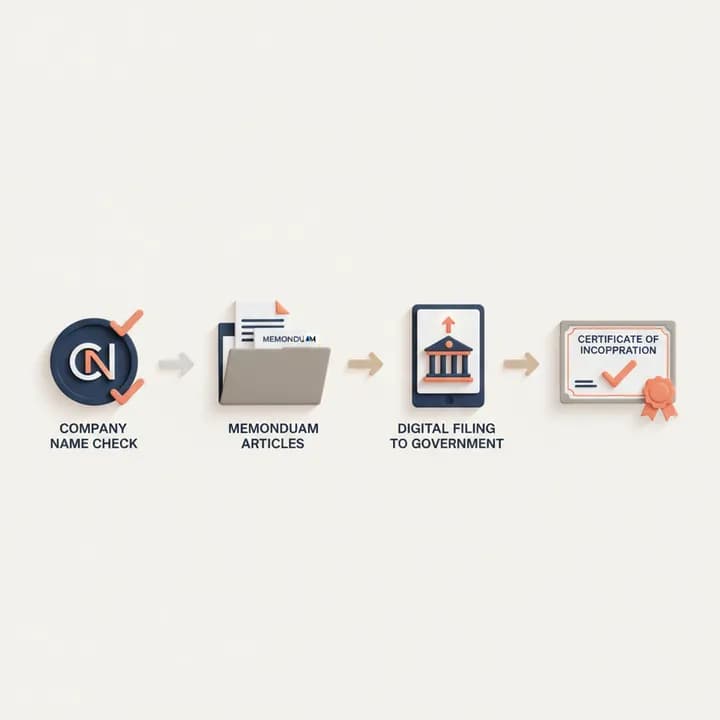
Choose the jurisdiction, pick a company name, pass KYC, sign the documents and receive your certificate of incorporation. You can start an application online.
Do I need to travel?
No. All six WeForm jurisdictions can be formed remotely.