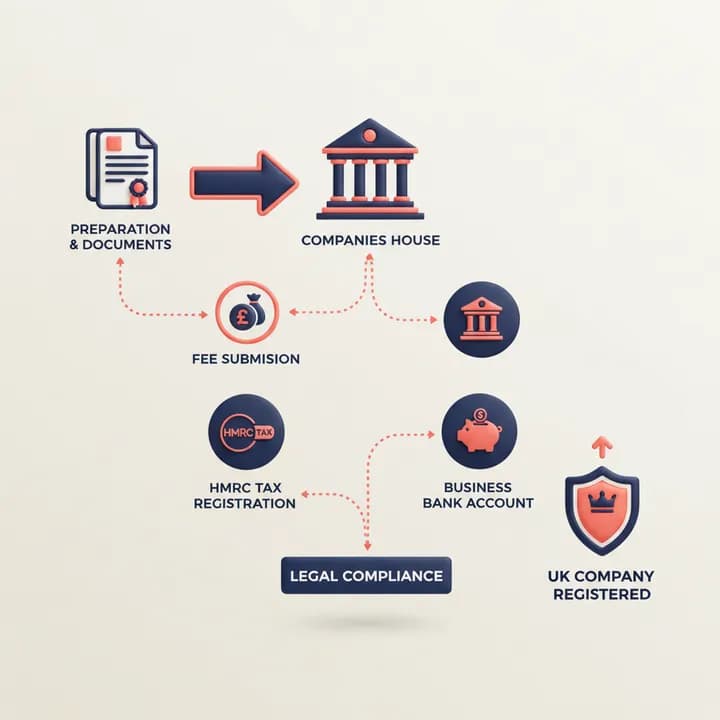
How to Register an Offshore Company in 2026
A step-by-step walk through registering an offshore company in 2026, from choosing the jurisdiction and company type to KYC, filing and opening a business account.
 6 min read
Registering an offshore company is far more straightforward than it was a decade ago. Most of the process now happens online, and in several jurisdictions a company can be incorporated within a few business days. What has become stricter is the paperwork around it: identity checks, proof of address, information about the business and its beneficial owners, and compliance once the company exists.
This guide walks through the registration process step by step. If you are still deciding whether an offshore company is right for you, start with Off-shore company: everything you have to know and Everything you need to know before setting up an offshore company.
Step 1: Prepare before you apply
Before you contact any provider or registry, be clear on three things:
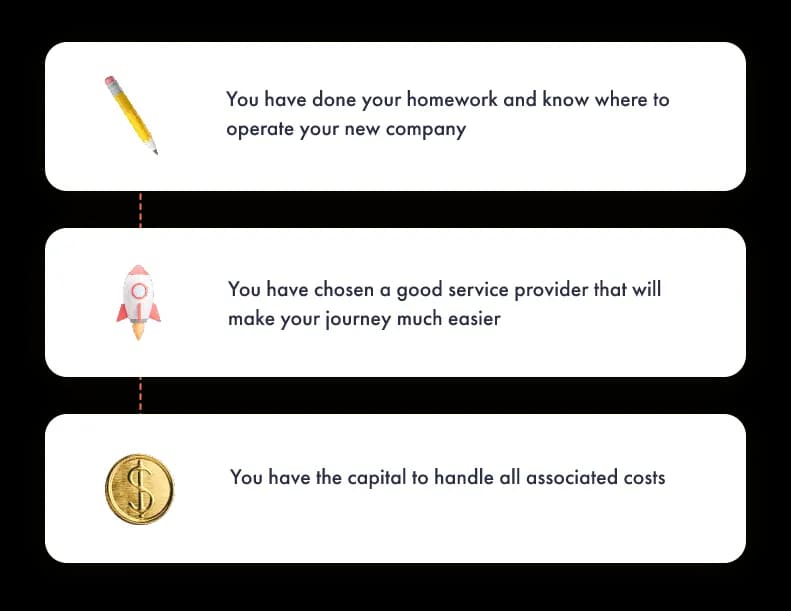
- What the company will do: trading, consulting, holding investments, owning intellectual property or a vessel. The activity affects which jurisdiction fits, what banks will ask and whether economic substance rules apply.
- Where you and your clients are: your own tax residence and where the company is managed often matter as much as where it is registered. Take advice in your home country if you are unsure.
- Your budget for year one and beyond: include the formation package, annual renewal, accounting and any bank or payment account fees.
Step 2: Choose the jurisdiction
A good jurisdiction matches your business, not just a low tax rate. Reputation, banking access, reporting obligations and annual costs all count. Countries with a zero tax rate may also face more questions from banks and counterparties, so weigh the whole picture.
The six jurisdictions WeForm registers companies in cover the most common needs:
- Seychelles IBC: territorial tax, a single director and shareholder allowed, typically registered in 1 to 4 business days.
- Marshall Islands corporation: no tax on non-resident income, private ownership records and corporate law modelled on Delaware's, usually 2 to 3 business days.
- Hong Kong private limited company: territorial tax and a gateway to Asian markets, 1 to 3 business days.
- UAE (IFZA Dubai free zone): 100% foreign ownership, 0% tax on qualifying income and UAE residence visas, around 5 business days.
- Costa Rica S.R.L. or S.A.: territorial tax and 100% foreign ownership, 5 to 10 business days.
- United Kingdom LTD: not offshore, but often used by non-residents for credibility; Companies House usually registers within 24 to 48 hours.
Also check that your nationality and country of residence are accepted. Registries and providers apply sanctions and risk screening, and some refuse applicants from certain countries. You can compare all six on our jurisdictions page.
Step 3: Choose the company type
"Offshore company" is a broad term. The legal form depends on the jurisdiction:
- International Business Company (IBC): designed for business outside the jurisdiction, with light reporting and one director and one shareholder allowed (they can be the same person). Seychelles is the classic example.
- Non-resident corporation: the Marshall Islands form, flexible and widely used for holding and shipping structures.
- Private limited company: the standard form in Hong Kong and the UK, with more reporting but strong recognition.
- Free zone company: such as an IFZA company in Dubai, licensed for specific activities.
- Limited liability company: for example the Costa Rica S.R.L., where members hold quotas rather than shares.
For a deeper comparison of these structures, read Company structure types and their benefits.
Step 4: Pick a reliable service provider
In most offshore jurisdictions you cannot file directly with the registry: a licensed registered agent must do it. The provider you choose also handles renewals, registers and filings later, so choose carefully.
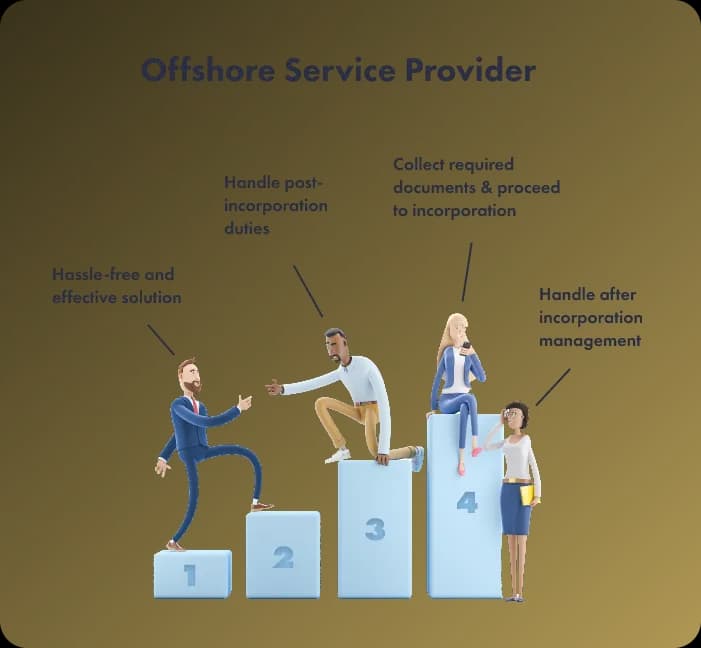
Check:
- Experience and track record in the jurisdictions you are considering
- What the package includes: government fees, registered office, registered agent, documents
- The renewal price for year two, not only the first-year price
- How customer support works and how quickly you get answers
- Whether they help with a business bank or payment account
- Reputation and independent reviews
Our article on the do's and don'ts of using an online service provider lists the warning signs to look out for.
Step 5: Choose and check the company name
The registry will reject a name that does not meet its rules. Common requirements:
- The name must be unique and not too similar to an existing company.
- Words such as Bank, Insurance, Trust, Fund or Securities usually need a licence or special approval.
- The name must end with the correct suffix for the company type, such as Limited, Ltd, Corporation, Corp., Inc. or S.R.L., depending on the jurisdiction.
Prepare two or three alternatives. Your provider checks availability with the registry before filing.
Step 6: Complete KYC and due diligence
Every registered agent must verify who is behind the company. Expect to provide, for each director, shareholder and beneficial owner:
- A valid passport or national ID
- Recent proof of residential address, such as a utility bill or bank statement
- A short description of the business activity and where it will operate
- Information about the source of funds and, in some cases, source of wealth
If a shareholder is itself a company, you will also need its certificate of incorporation, constitutional documents and registers of directors and members, plus identification of the people who ultimately own it. With WeForm, identity checks happen online and documents are signed electronically, so there are no couriers or notary visits for the standard process.
Step 7: Filing and incorporation
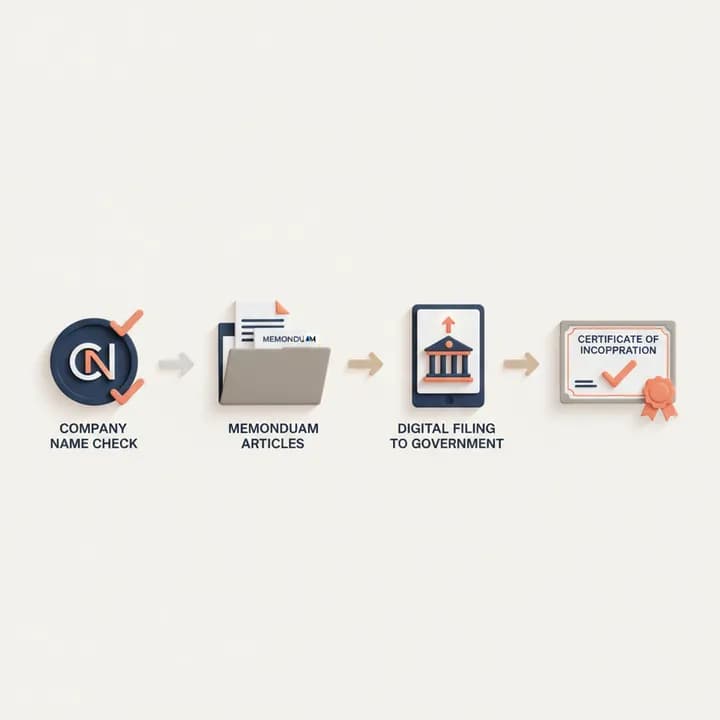
Once your details are verified, the provider prepares the constitutional documents (for example Memorandum and Articles, or Articles and Bylaws) and files them with the registry. After approval you receive:
- The Certificate of Incorporation
- The constitutional documents
- Share certificates and statutory registers
- Details of your registered office and registered agent
With WeForm, these documents appear in your client dashboard as soon as they are issued.
Step 8: After registration
Registration is the start, not the end. Plan for:
- A business account: banks and payment institutions will run their own checks. Our banking services introduce your company to supported institutions, and our article on the difficulties of opening a bank account explains how to prepare.
- Annual renewal: government fees and registered agent fees fall due every year.
- Ongoing compliance: accounting records, beneficial ownership registers and, in some jurisdictions, economic substance reports. See our Seychelles IBC compliance checklist for a practical example.
Register your offshore company with WeForm
WeForm handles the full process online: application, identity checks, electronic signing, filing and your corporate documents in one dashboard. Packages include year-one government fees, registered office and registered agent where applicable, plus payment account opening assistance, with no hidden fees. When you are ready, start your application.
FAQ
How long does it take to register an offshore company?
It depends on the jurisdiction. Hong Kong typically takes 1 to 3 business days, Seychelles 1 to 4, the Marshall Islands 2 to 3, IFZA Dubai around 5 and Costa Rica 5 to 10 business days, once your documents are complete.
Do I need to travel to register an offshore company?
No. For the jurisdictions WeForm offers, the standard process is fully remote with online identity checks and electronic signatures.
Can one person be the only director and shareholder?
Yes, in many jurisdictions, including Seychelles, the Marshall Islands and the UK.
Is an offshore company legal?
Yes. Offshore companies are legal business structures. You remain responsible for reporting and paying tax correctly in the countries where you and the company are tax resident.