Sole Proprietorship vs Limited Liability Company: What's the difference?
Sole trader or limited company? Compare personal liability, tax, admin and credibility, and learn when it makes sense to move from sole proprietorship to a company.
 6 min read
One of the first decisions you make when you start working for yourself is the legal structure of your business. The two most common options are operating as a sole proprietor (called a sole trader in the UK) or forming a limited liability company. The choice affects how much personal risk you carry, how you are taxed, how much paperwork you handle and how clients, banks and investors see you.
This guide explains the differences in plain terms. Examples use UK rules because the UK private limited company (LTD) is one of the most popular structures for small businesses worldwide, but the principles apply in most countries. It is general information, not tax or legal advice.
What is a sole proprietorship?
A sole proprietorship is a business owned and run by one person, with no legal separation between the owner and the business. In the UK you become a sole trader by registering for Self Assessment with HMRC; there is nothing to file with Companies House.
Main features:
- You are the business. Profits are your personal income, and business debts are your personal debts.
- Unlimited liability. If the business cannot pay its debts or faces a legal claim, your savings, home and other personal assets can be at risk.
- Full control. There are no shareholders or directors to answer to.
- Simple administration. You keep records and file a personal tax return each year.
- Easy access to money. You can take money out of the business whenever you like, though you are taxed on profits whether you withdraw them or not.
What is a limited liability company?
A limited liability company is a separate legal entity. It owns its assets, signs its own contracts, has its own bank account and is responsible for its own debts. In the UK the usual form is the private company limited by shares, which uses "Limited" or "Ltd" after its name. In the US the equivalent small-business vehicle is the LLC; our article on LLC vs LTD vs corporation explains how the different labels compare.
Main features:
- Limited liability. Shareholders can normally only lose what they invested in the company. Directors are not personally liable for the company's debts, except in cases such as fraud, wrongful trading or personal guarantees they have signed.
- Ownership through shares. The company is owned by its shareholders and run by its directors. In a one-person company you can be both.
- More formal duties. Directors have legal duties, and the company files annual accounts and a confirmation statement. See the seven responsibilities of a corporate director.
- Public record. Company details, directors and people with significant control appear on the public register.
Key differences at a glance
- Legal status: a sole proprietorship is not separate from its owner; a limited company is a separate legal person.
- Liability: unlimited for a sole proprietor; limited to the investment for company shareholders.
- Setup: a sole trader simply registers with the tax authority; a company is incorporated with the company registry.
- Tax: a sole trader pays income tax on all profits; a company pays corporation tax and the owner is taxed on salary and dividends taken out.
- Paperwork: lighter for a sole trader; a company keeps statutory registers and files accounts and annual returns.
- Credibility: many larger clients, banks, payment providers and investors prefer or require a company.
- Raising money and selling the business: much easier with a company, because you can issue or transfer shares.
How each structure is taxed (UK example)
Sole trader
All business profit is added to your other income and taxed at your personal income tax rates. You also pay Class 4 National Insurance: for 2026/27, 6% on profits between GBP 12,570 and GBP 50,270 and 2% above that. Class 2 contributions are no longer compulsory; if your profits are above the small profits threshold, they are treated as paid, protecting your entitlement to the State Pension. Current rates are published on GOV.UK.
Limited company
The company pays corporation tax on its profits: 19% on profits of GBP 50,000 or less, 25% on profits above GBP 250,000, with marginal relief in between (see GOV.UK corporation tax rates). As a director-shareholder you then pay personal tax on what you take out, usually as a mix of salary through PAYE and dividends. Profits you leave in the company are not taxed again until you withdraw them.
Whether a company saves tax depends on your profit level, how much you need to withdraw and where you live. At low profits, the extra accounting costs of a company can outweigh any saving. Check your figures with an accountant before deciding.
Advantages and disadvantages
Sole proprietorship
- Pros: quick and cheap to start, minimal paperwork, full control, private financial information.
- Cons: unlimited personal liability, harder to raise money, some clients and payment providers will not work with individuals, and the business cannot be sold as easily.
Limited company
- Pros: personal assets are protected, more professional image, easier to bring in partners or investors, profits can be retained in the company, and the business can continue if ownership changes.
- Cons: formation and annual costs, more filing obligations, information on the public register, and stricter rules on taking money out.
When does it make sense to switch to a company?
Many people start as sole traders and incorporate later. Common triggers include:
- profits growing to a level where the tax position favours a company
- signing larger contracts or taking on risks you do not want to carry personally
- bringing in a co-founder or investor
- clients or platforms that only contract with companies
- selling internationally and needing a business account, payment processing or multi-currency collections in the company's name
If you do incorporate, you transfer the business activity into the new company and close or update your sole trader registration. Our guide to company structure types covers other options, such as partnerships.
Forming a limited company with WeForm
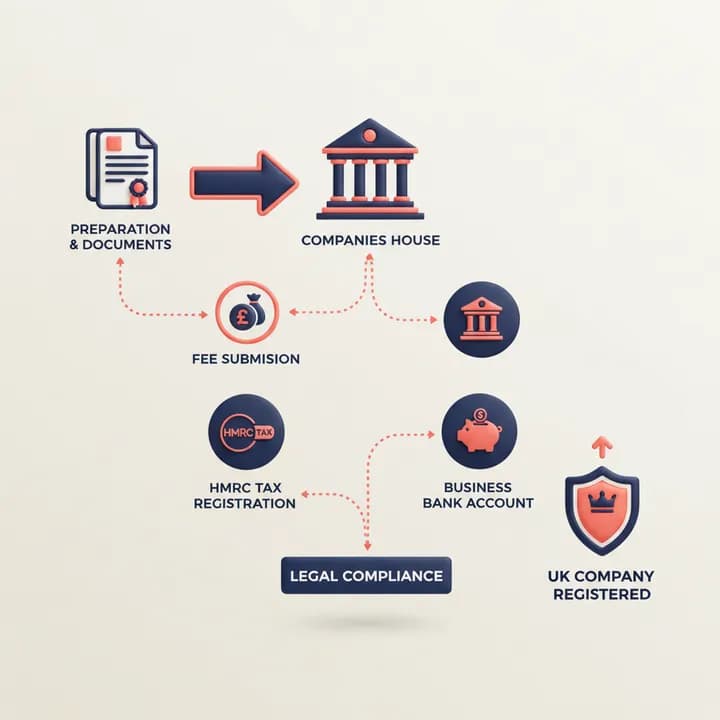
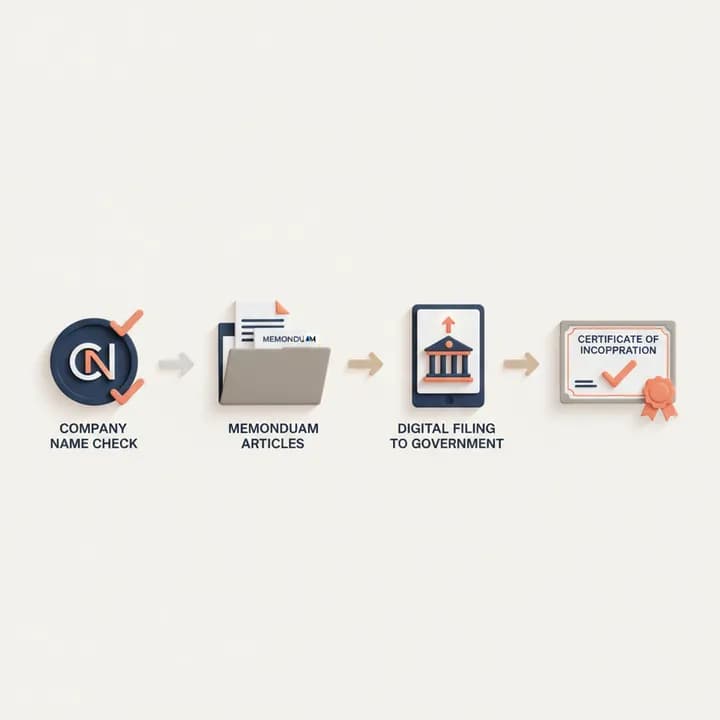
A UK private limited company with WeForm starts from GBP 175, including the name check, incorporation documents, electronic filing with Companies House, your Certificate of Incorporation and CRN, and a UK registered office for 12 months. Companies House usually registers the company within 24-48 hours of filing. Read our guide to registering a company in the UK and the current UK incorporation fees, or start your application online. Every package also includes help opening a business account with supported financial institutions.
FAQ
Is a limited company better than being a sole trader?
Not always. A limited company protects your personal assets and can be more tax efficient at higher profits, but it costs more to run and involves more filings. For a small side business with low risk, a sole proprietorship may be enough.
What is the difference between Ltd and Pvt Ltd?
Both describe a private company limited by shares. "Ltd" is used in the UK and many Commonwealth countries; "Pvt Ltd" is the form used in countries such as India. A public limited company uses "PLC" in the UK and can offer shares to the public.
Can a sole trader have employees?
Yes. A sole trader can employ staff, but must register as an employer and run payroll, just like a company.
Do I need to be a UK resident to form a UK limited company?
No. Directors and shareholders can live anywhere, but the company needs a UK registered office and directors must verify their identity with Companies House.